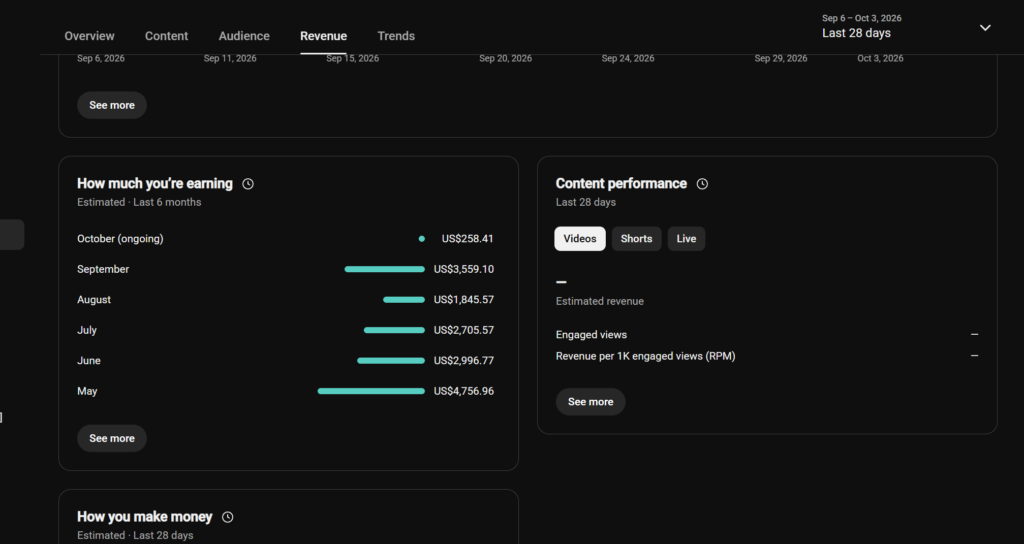
One of the most common questions new creators ask is: “When can I start earning money from YouTube?” The answer depends on the YouTube Partner Program (YPP), which has two main tiers. Here is what each tier requires and how to work toward them.
The lower tier: fan funding
YouTube opened monetization to smaller channels through fan funding features such as channel memberships, Super Chat, Super Thanks, and shopping features. To qualify, a channel generally needs:
- At least 500 subscribers
- At least 3 valid public uploads in the last 90 days
- Either 3,000 valid public watch hours in the last 12 months, or 3 million valid public Shorts views in the last 90 days
The full tier: ad revenue sharing
To earn a share of advertising revenue, the biggest income source for most creators, the bar is higher:
- At least 1,000 subscribers
- Either 4,000 valid public watch hours in the last 12 months, or 10 million valid public Shorts views in the last 90 days
Watch hours vs. views: what counts?
Only watch time on public videos counts toward the watch-hour thresholds: private, deleted, or unlisted videos do not. For Shorts views, only views in the Shorts feed count. You cannot combine long-form watch hours with Shorts views to meet a single threshold; you must qualify through one path or the other.
Other requirements you should know
Beyond the numbers, YouTube also requires: no active Community Guidelines strikes, two-step verification enabled on your Google account, and a linked AdSense account to receive payments. Your channel must also follow YouTube’s monetization policies, which cover advertiser-friendly content guidelines and rules against reused or repetitive content.
How long does it take?
There is no fixed timeline. Some channels reach the thresholds in months; others take years. The realistic path is the same one behind every successful channel: publish consistently, improve each video, and let the requirements take care of themselves.
Beyond ad revenue
Even before joining the YPP, creators earn through affiliate links, sponsorships, digital products, and freelance services. Treat ad revenue as one stream among many, not the finish line.
Note: YouTube updates its policies periodically, so always confirm the current requirements on YouTube’s official monetization policy pages before making plans around them.